
Quick Answer
If a tile roof leaks but the tiles look intact, underlayment may be the problem. Common signs include ceiling stains, exposed felt, brittle material, and leaks near valleys or vents.
What Underlayment Does
Tile is not the only layer protecting your home. Underlayment helps shed water that gets beneath the tile surface.
Concrete and clay tiles protect the roof from direct sun, hail, and debris. But wind-driven rain can still move under tile during storms.
That is why underlayment matters. It acts as the backup water barrier before moisture reaches wood decking.
Why Arizona Heat Wears It Down
Long heat exposure can dry out older underlayment. Broken or slipped tiles speed up that damage by exposing the layer below.
Surprise summers push roofing materials hard. Attic heat, UV exposure, dust, and age all play a role.
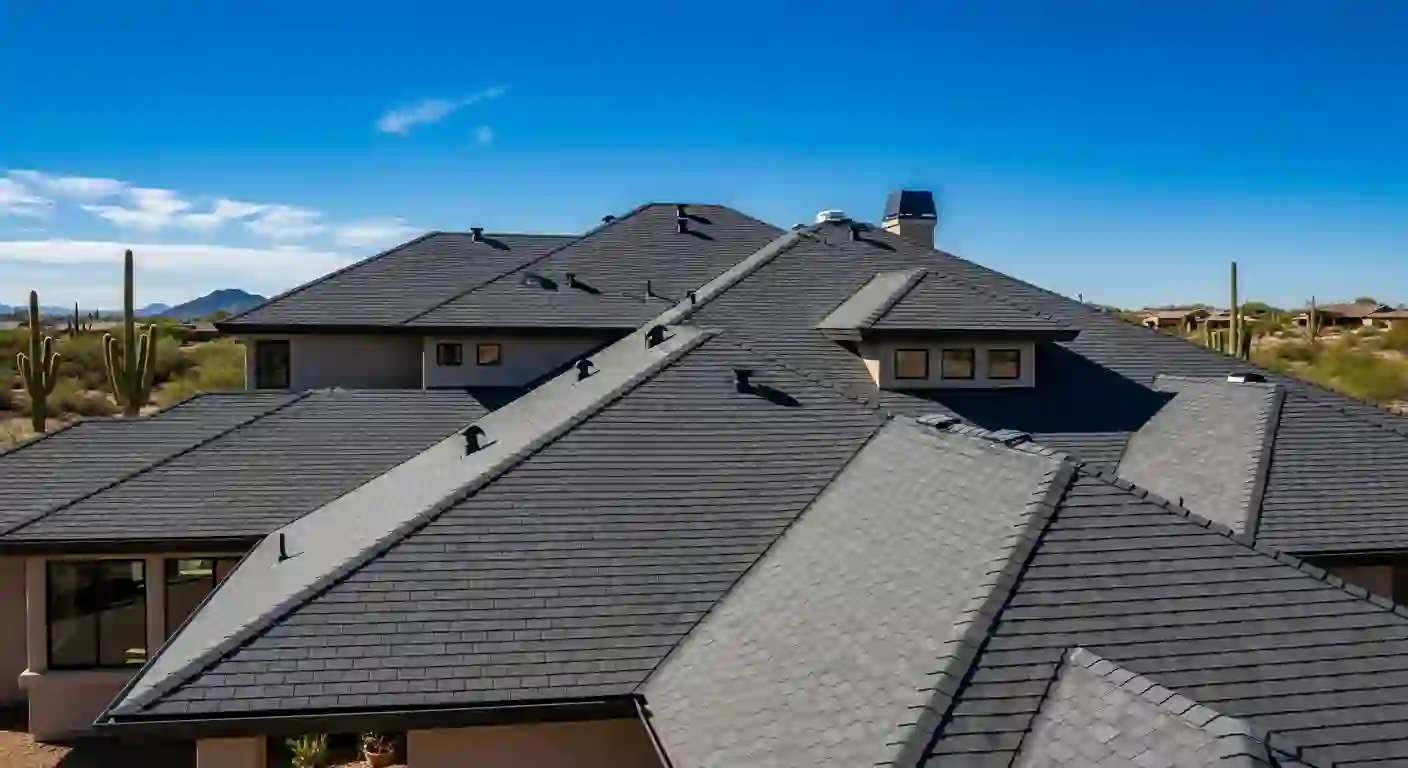
A tile roof can look strong from the street while the hidden layer is nearing failure. That is why leak location matters.
Repair or Replace the Underlayment
Small underlayment issues may be repaired in sections. Widespread failure often needs a larger roof plan.
If one valley is leaking, a targeted repair may work. If several areas leak after every storm, replacement may be smarter.
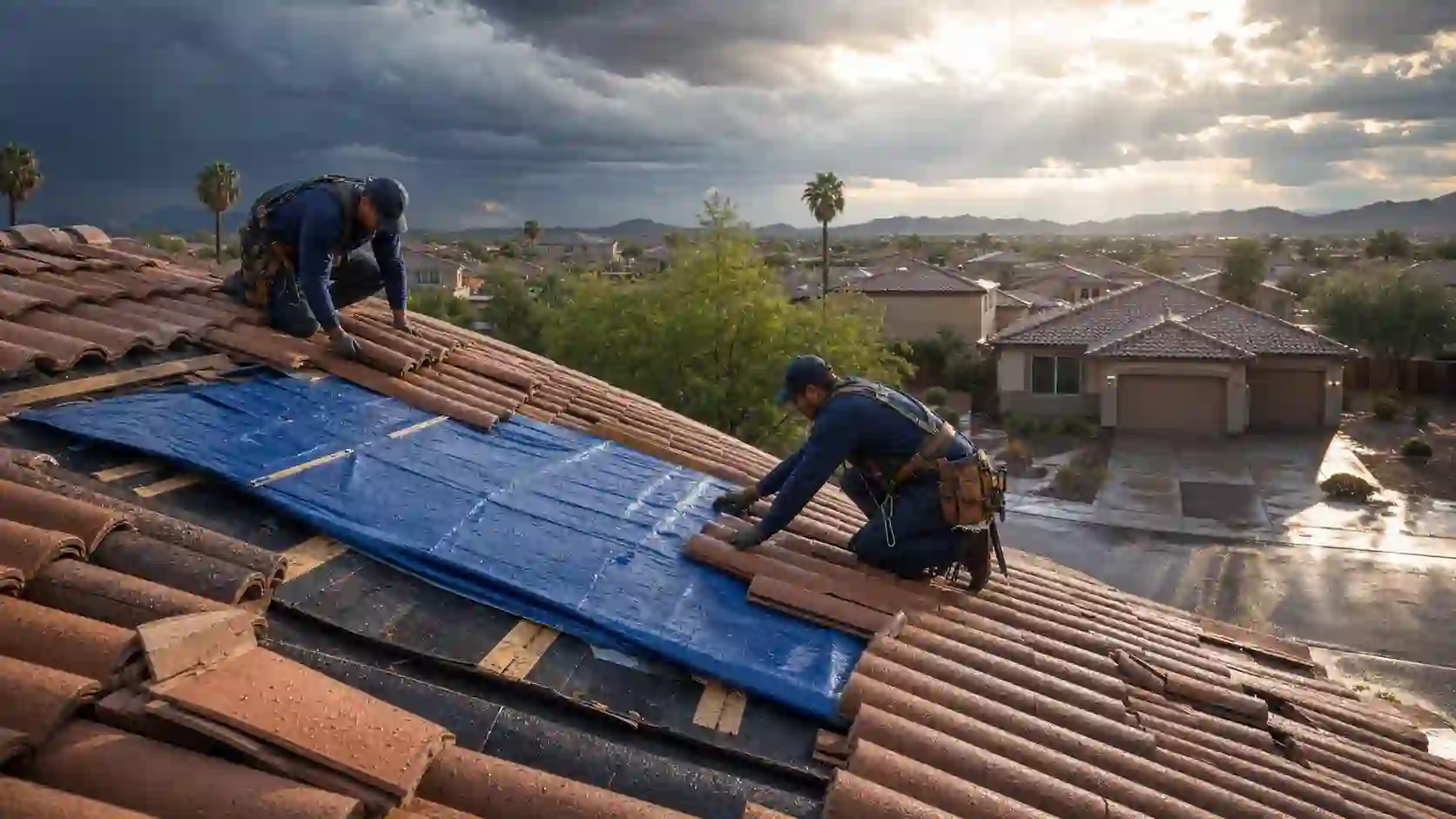
A roofer should lift tile only where needed during diagnosis. The estimate should explain how much tile must be removed and reset.
Why Good Tile Can Still Leak
Tile roofs can leak even when the visible tile looks fine. The underlayment below the tile is often the part that fails first.
Concrete and clay tiles shed most water, but wind-driven rain can still move beneath them. The hidden underlayment protects the decking when that happens.
This is common in older Surprise neighborhoods and active adult communities. The tile may outlast the layer below it.
Signs the Hidden Layer Is Failing
Ceiling stains, brittle felt, recurring leaks, and exposed underlayment can point to failure. These signs need a closer roof inspection.
Leaks near valleys, vents, chimneys, and skylights are common because those areas move water and handle flashing details.
A roofer may need to lift a small tile section to confirm the problem. Guessing from the ground can miss the real source.
- Leak with intact tile
- Brittle or torn felt
- Stains after wind-driven rain
- Repeated valley leaks
- Broken tiles exposing underlayment
Remove and Reset vs Full Replacement
A remove-and-reset job can replace underlayment while keeping usable tile. Full replacement may be needed when tile, decking, or roof layout has bigger problems.
If the existing tile is still strong and available for matching, reuse may save money. Broken, discontinued, or brittle tile can change that plan.
Ask whether the estimate includes battens, flashing, valley metal, disposal, and broken tile allowance. Those details affect the final cost.