Quick Answer
Flat roof coating works best when the roof is dry, clean, and structurally sound. It will not fix trapped moisture, bad drainage, rotten decking, or failed seams by itself.
Where Flat Roofs Usually Fail
Flat roofs often leak at seams, drains, parapet walls, and roof penetrations. These areas handle water movement and heat expansion.
Many Surprise homes have flat sections over patios, garages, or additions. Those roof areas need clean drainage paths and tight transitions.
If water ponds after rain, coating may wear faster. A repair plan should address drainage before applying more material.
- Ponding water
- Cracked coating
- Open seams
- Parapet flashing gaps
- Soft or wet roof areas
When Coating Is a Good Fit
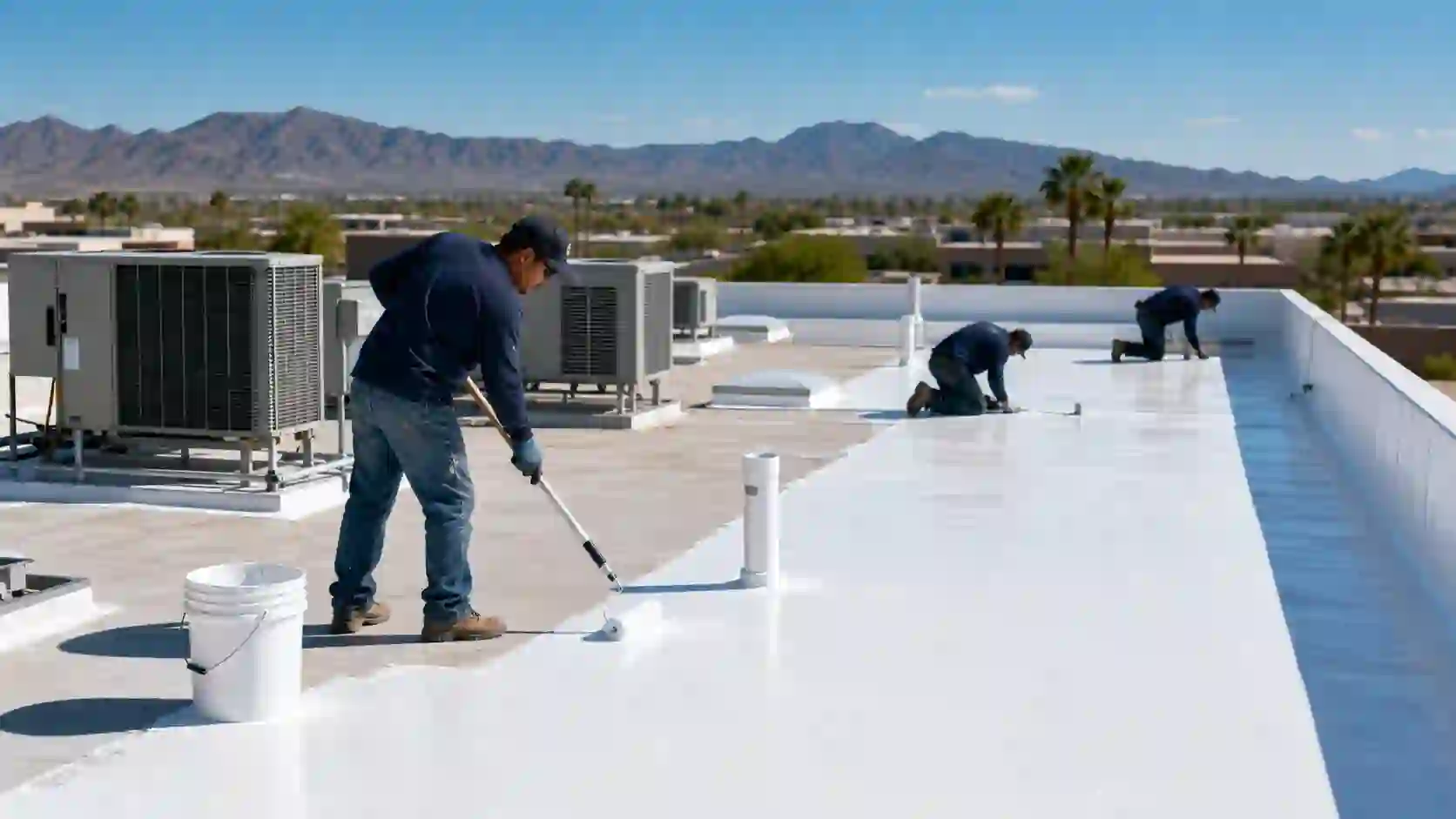
Coating can extend roof life when the surface is still sound. It can also improve reflectivity on exposed low-slope sections.
A roofer should clean the roof, repair open seams, seal penetrations, and apply the right coating thickness.
Skipping prep work is where many coating jobs fail. The roof must be ready before the coating goes down.
When Repair or Replacement Comes First
Coating should not cover active moisture problems. Wet insulation, soft decking, or widespread membrane failure needs repair first.
If a flat roof keeps leaking after patching, the issue may be deeper than the surface coating.
A written estimate should explain whether the roof needs a patch, recoat, foam repair, or replacement.
Why Prep Work Matters More Than the Coating Brand
Flat roof coating only performs well on a prepared surface. Cleaning, seam repair, and dry roof conditions matter before application.
Coating over dust, wet spots, or open seams can fail quickly. Surprise dust and summer heat make surface prep even more important.
A proper estimate should explain cleaning, patching, primer if needed, and coating thickness. Those steps affect price and life span.
Foam, Modified Bitumen, and Coating Differences
Foam, modified bitumen, and elastomeric coatings are not the same thing. Each system handles water, heat, and repairs differently.
Foam roofs need a protective coating layer. Modified bitumen relies on seams and membrane condition.
Elastomeric coating can extend life when the roof below is sound. It should not be used to hide major failure.
- Foam needs UV protection
- Modified bitumen needs seam checks
- Coating needs dry surfaces
- Ponding water shortens life
- Parapet walls need sealing
When Ponding Water Changes the Plan
Ponding water can turn a simple recoat into a drainage repair. Standing water wears coatings faster and finds weak seams.
Low areas around scuppers, drains, and patio covers need close inspection. A roof that holds water after rain may need slope correction or targeted repair.
Ask the roofer to explain where water drains and where it stalls. That answer matters more than coating color.