Quick Answer
If your roof leaks after rain, check for ceiling stains, attic moisture, missing shingles, cracked tiles, clogged valleys, and worn sealant around vents. Active leaks need fast attention.
The Leak May Not Be Above the Stain
Water can travel before it shows inside. A ceiling stain may appear several feet from the actual roof problem.
Water often follows rafters, underlayment, insulation, or drywall seams. That makes leak tracing harder than it looks.
This is common after wind-driven monsoon rain. Water enters at a small opening and moves before dripping indoors.
Common Leak Sources in Surprise Homes
Most roof leaks start around transitions and penetrations. These parts move, age, and dry out under heat.
Pipe jacks, vents, skylights, chimneys, valleys, and wall flashing deserve close inspection. Flat roof tie-ins can also leak if water ponds.
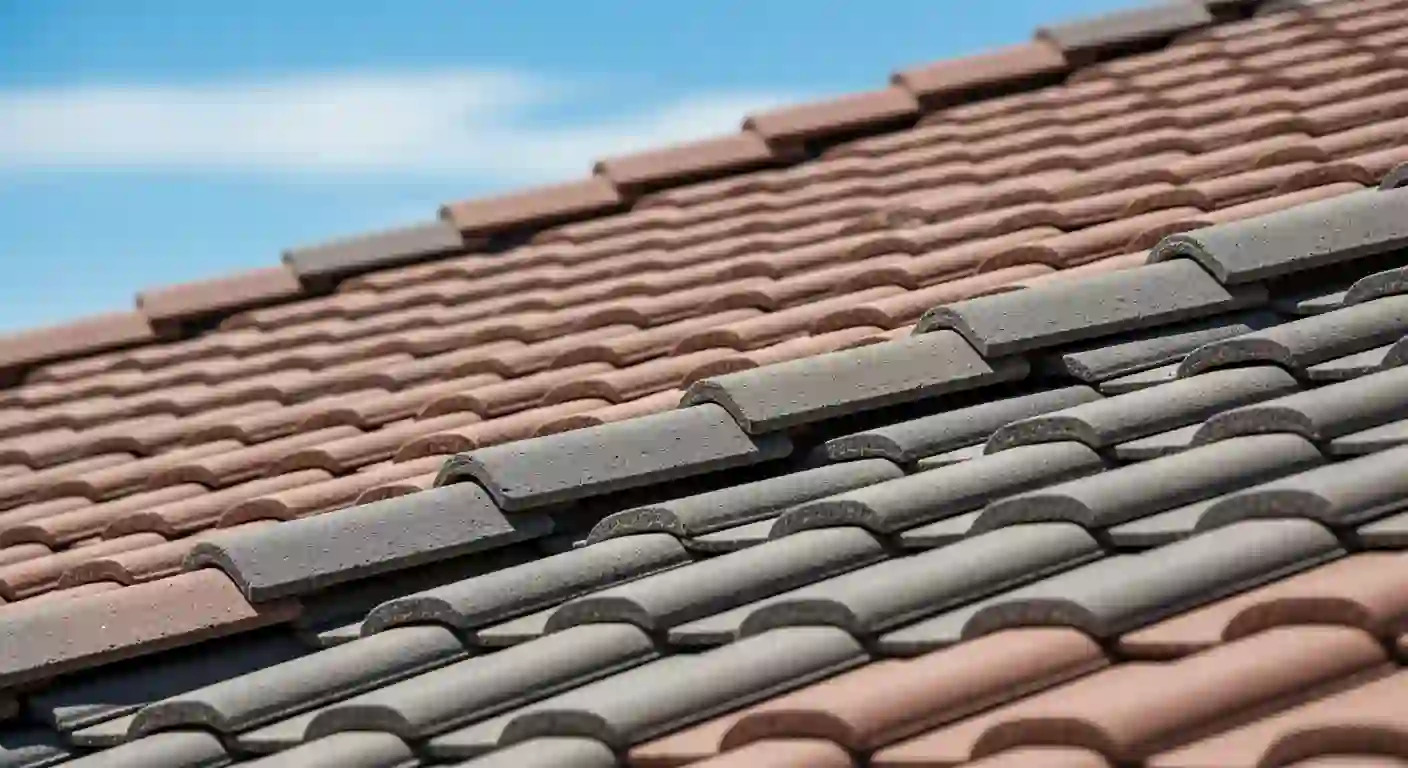
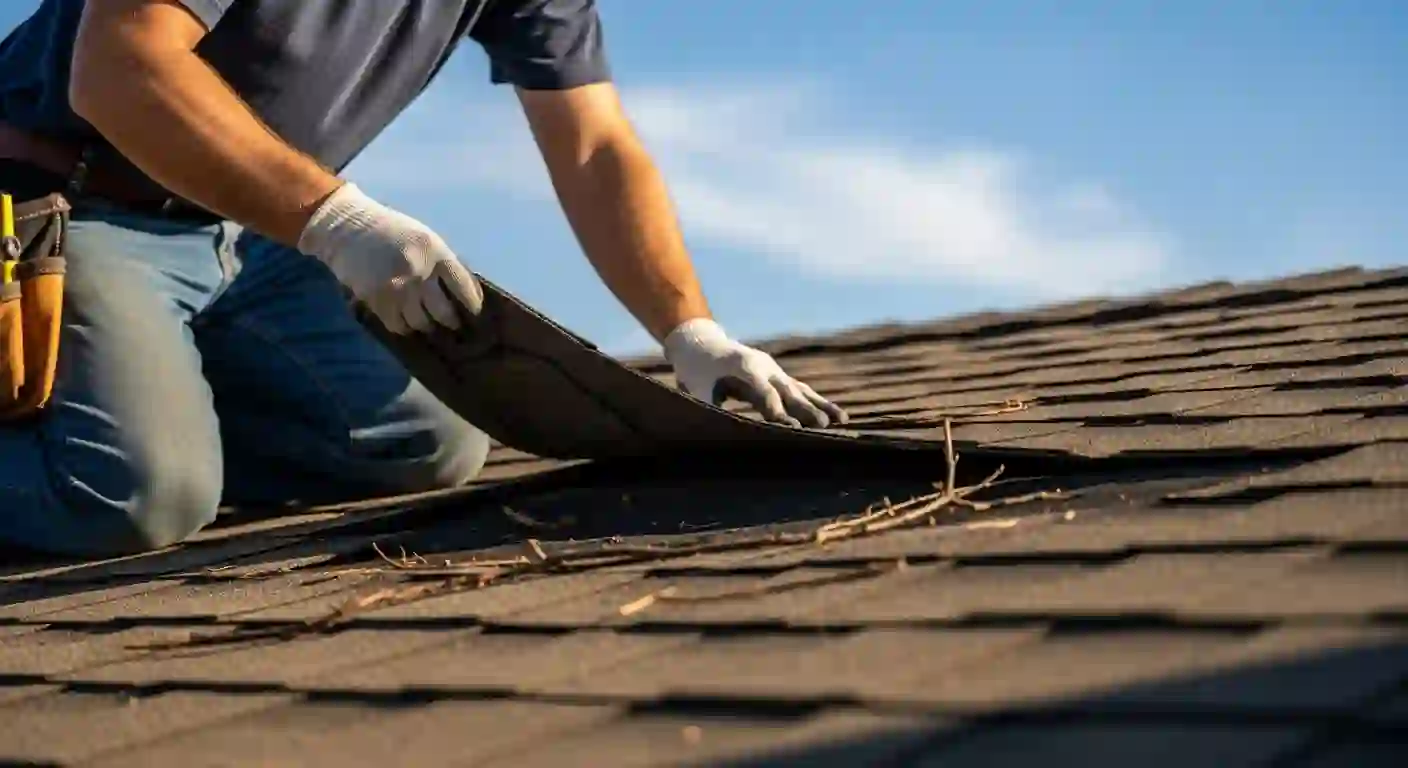
Tile roofs may leak when cracked tiles expose old underlayment. Shingle roofs may leak when tabs lift or granules wear away.
- Failed pipe jack boots
- Cracked or slipped tiles
- Lifted shingles
- Valley debris
- Flat roof coating cracks
What to Do During an Active Leak
Protect the inside first. Move belongings, catch dripping water, and call for repair if water keeps entering.
Do not climb on the roof during rain. Wet roof surfaces are unsafe, and walking on tile can break more pieces.
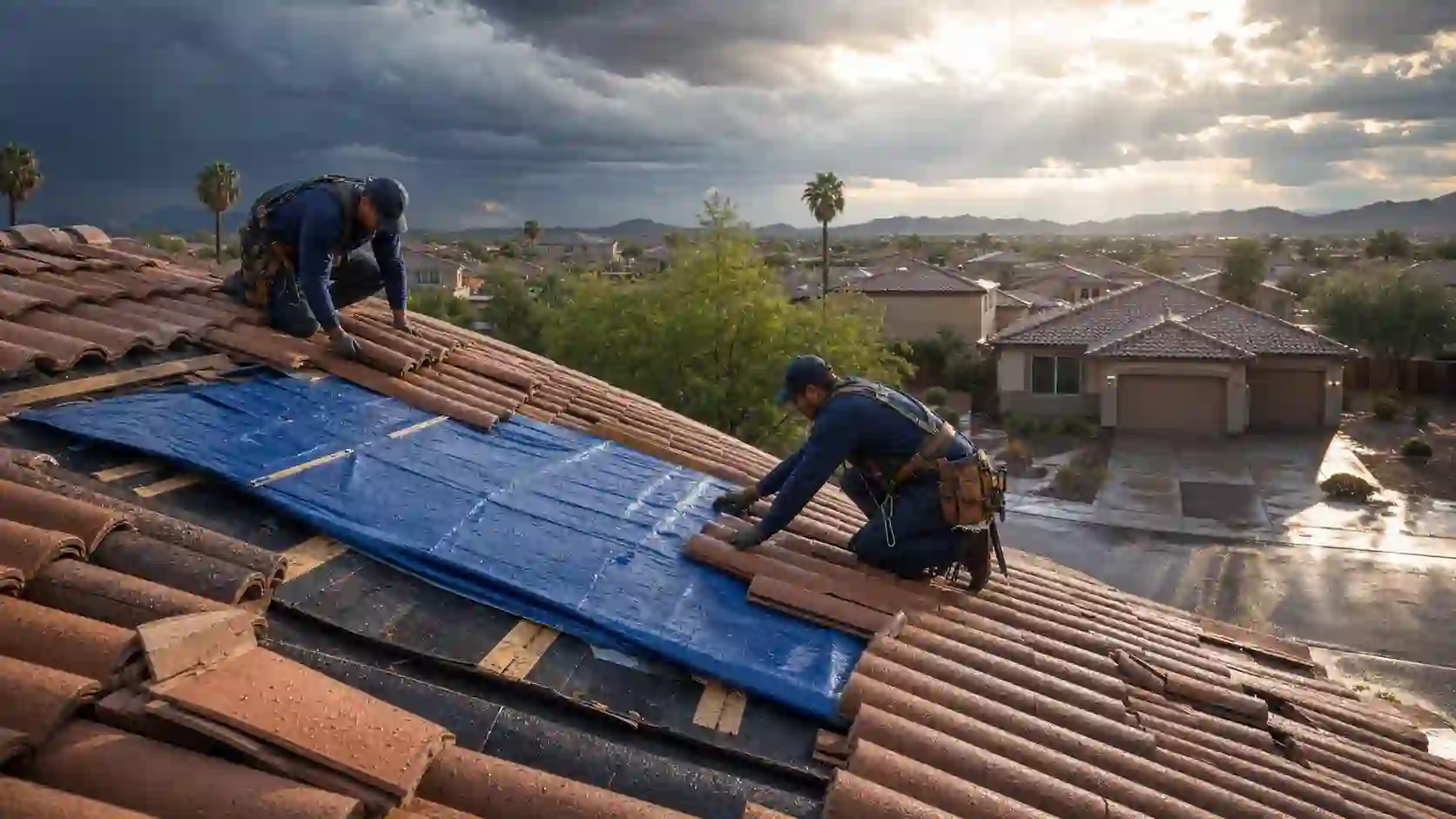
If the leak is serious, emergency tarping may be needed before permanent repair can happen.
Why Leaks Show Up During Heavy Rain Only
Some leaks only show during wind-driven rain. Light rain may not push water into the same weak point.
Monsoon wind can drive water sideways under tile, lifted shingles, and loose flashing. That is why the same roof may stay dry during a gentle shower.
Leak timing helps diagnosis. Tell the roofer whether water appears during rain, after rain, or only when wind comes from one direction.
Roof Areas That Need Careful Diagnosis
Valleys, vents, skylights, wall transitions, and flat roof tie-ins need careful diagnosis. These areas carry more leak risk than open roof fields.
A stain near a hallway may come from a valley several feet away. Water can travel along framing before it enters the ceiling.
Photos from the attic and roof help connect the stain to the real opening. Guessing from the room below can lead to the wrong repair.
- Valley metal
- Pipe jack boots
- Skylight flashing
- Wall-to-roof transitions
- Flat roof tie-ins
What Not to Do During a Leak
Do not climb on a wet roof or smear sealant over random areas. Unsafe or rushed fixes can make the repair harder.
Move furniture, catch water, and take clear photos of stains and drips. If the ceiling bulges, keep people away from that area.
A roofer can tarp or repair once conditions are safe. Permanent work should address the leak source.